

Yes, Dogs Can Get Sunburned: How to Protect Your Pet This Summer

Most pet owners know to watch for heatstroke in the summer, but sunburn? That one often comes as a surprise. Yes — dogs absolutely can get sunburned, and for some dogs, repeated sun exposure can even lead to skin cancer over time.

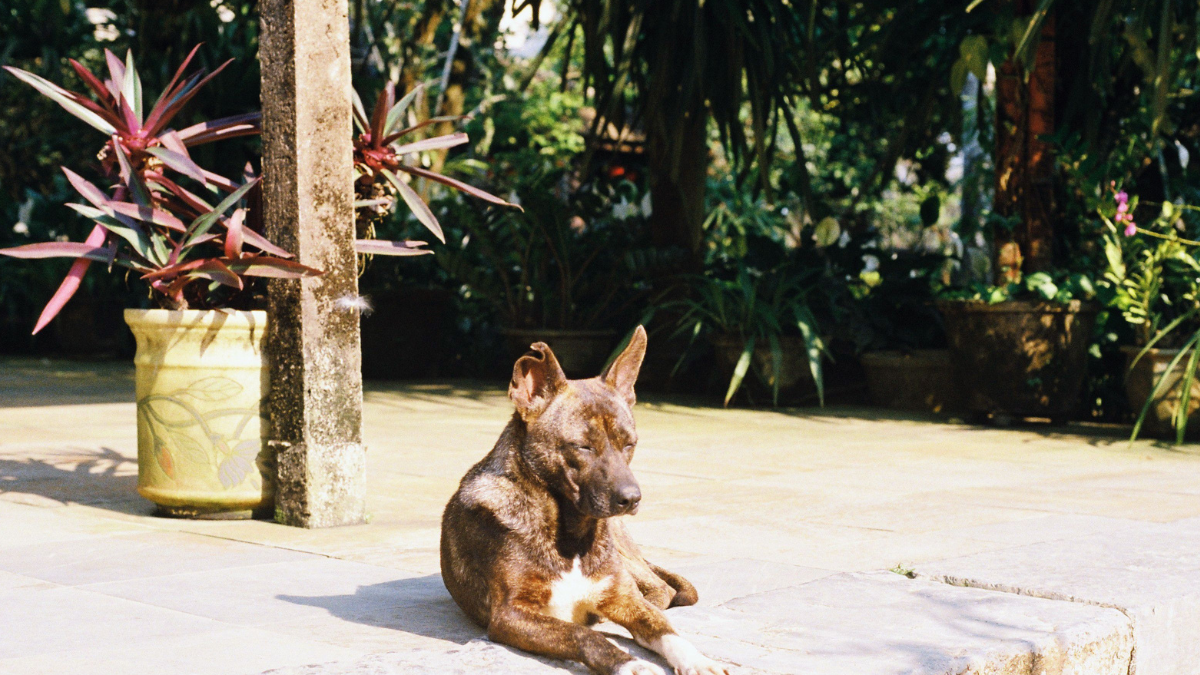
Small brown dog lying on a sunny patio beside a potted plant and a tree.

Which Dogs Are Most at Risk?

While any dog can experience sun damage, some are significantly more vulnerable:

  • Dogs with white or light-colored fur
  • Dogs with thin or short coats (think Dalmatians, Whippets, Boxers, and Bull Terriers)
  • Dogs with pink or unpigmented skin around the nose and ears
  • Dogs who have had areas shaved for surgery or grooming
  • Senior dogs whose skin has become thinner over time

Where Sunburn Shows Up

Sunburn in dogs most commonly appears on:

  • The bridge of the nose
  • The ear tips
  • The belly (especially when dogs lie in the sun on their back)
  • Around the eyelids


It looks similar to human sunburn — red, irritated, sometimes flaky or peeling skin. In more serious cases, blistering can occur.

Dog walking on a sunlit rocky path in a dry field at sunrise

How to Protect Your Dog

Use Pet-Specific Sunscreen This is critical: do NOT use human sunscreen on your dog. Many human sunscreens contain zinc oxide or para-aminobenzoic acid (PABA), both of which are toxic to dogs if ingested — and dogs will lick whatever you put on them. Look for sunscreens specifically formulated for pets and apply to the nose, ear tips, and belly before heading outside.


Limit Peak Sun Exposure UV rays are strongest between 10 a.m. and 4 p.m. Try to schedule outdoor time for the early morning or evening hours.


Provide Shade If you're spending extended time outdoors — at a park, lake, or backyard — make sure your dog has consistent access to a shaded area. A canopy, tree cover, or umbrella works well.


Consider Protective Clothing Yes, dog sun shirts are a real thing and they work. UV-protective dog shirts are especially useful for dogs with very thin coats or skin conditions.

What to Do if Your Dog Gets Sunburned

Move them to a cool, shaded area. You can apply a cool, damp cloth to the affected area for comfort, but avoid any products with lidocaine, benzocaine, or fragrances. If blistering, swelling, or significant irritation is present, contact your veterinarian.


Our team at Violet Crown Veterinary Specialists is available 24 hours a day, 7 days a week to help with any summer health concern. Reach us at 512-284-2877 or visit us at 14360 Falcon Head Blvd., Bee Cave, TX 78738.

Close-up of a sleeping brown and white dog’s paw resting on a soft white blanket
June 10, 2026
Every summer, thousands of dogs suffer painful paw pad burns from hot pavement — and most pet owners never see it coming. While you're enjoying the warm weather and sunny walks, the ground beneath your dog's paws can reach scorching temperatures that cause serious, lasting damage in a matter of seconds. Burnt paw pads are one of the most common and most preventable summer emergencies we treat at our clinic, yet they remain one of the most overlooked hazards of the season.
Brown dog swimming in a calm lake, leaving a ripple trail behind
June 10, 2026
Summer means more time near the water — lakes, pools, rivers, and beaches. For most dogs, swimming is pure joy. But what many pet owners don't know is that water itself can be a hidden danger. From exhaustion-related drowning to a surprisingly common condition called water intoxication (hyponatremia), the risks of aquatic fun go far beyond the obvious. Knowing what to watch for could save your dog's life.