Is Your Dog Dehydrated? The Signs Pet Owners Miss Every Summer

Dehydration is one of those summer dangers that creeps up quietly. Your dog may seem fine one hour and be in serious trouble the next — especially during the intense heat of an Austin summer when temperatures regularly climb above 100°F.


Understanding the signs of dehydration and knowing how to act quickly can make a meaningful difference in your dog's health and safety.

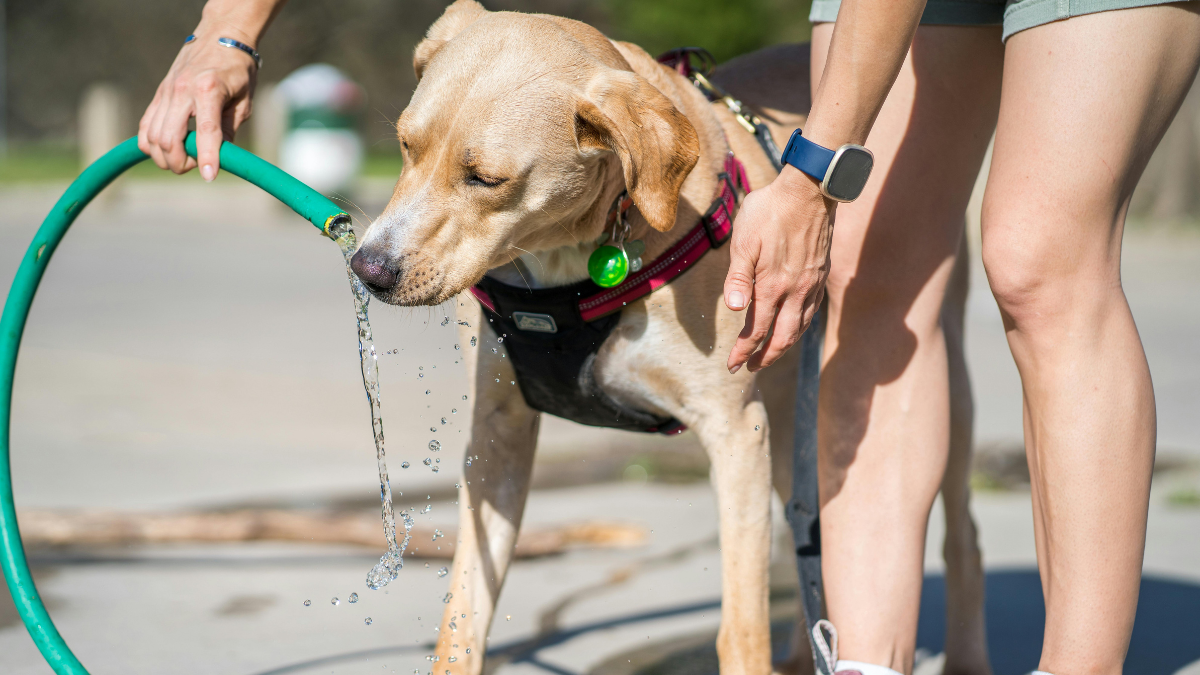
Golden retriever drinking water from a hose held by two people at a beach

Why Dogs Dehydrate Faster Than We Realize

Dogs cool themselves primarily through panting, which causes them to lose moisture rapidly. Unlike humans, they don't sweat through their skin (only slightly through their paw pads). On a hot day — especially during exercise — a dog can lose fluids far faster than they're replenishing them, even if water is available.


The Warning Signs of Dehydration

  • Dry, sticky gums (healthy gums should be moist and slick)
  • Loss of skin elasticity (see the test below)
  • Sunken eyes
  • Lethargy or unusual fatigue
  • Reduced or dark-colored urine
  • Excessive panting even when at rest
  • Loss of appetite

The At-Home Skin Test

This is one of the easiest ways to check your dog's hydration in the moment. Gently grasp the skin on the back of their neck or between their shoulder blades, lift it slightly, and release it. In a well-hydrated dog, the skin snaps back into place almost instantly. If the skin returns slowly or stays "tented" in place, your dog is likely dehydrated and needs water and veterinary attention.

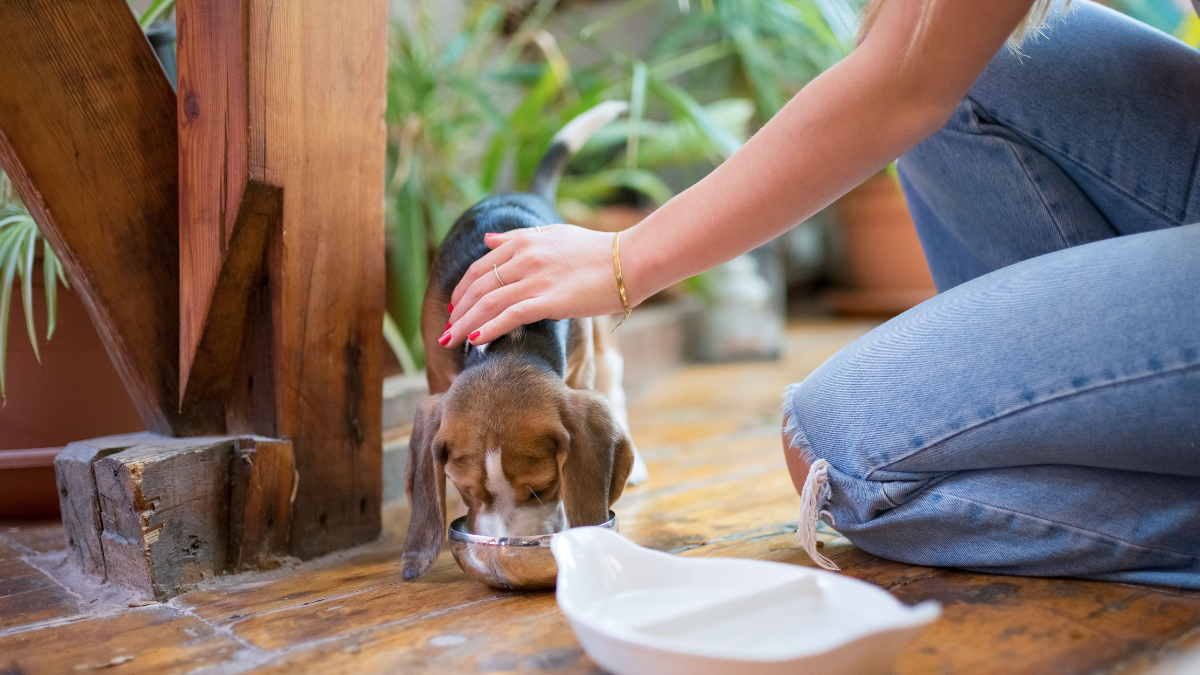
Person petting a wet puppy on a wooden floor beside a water bowl.

How to Keep Your Dog Hydrated This Summer

  • Refresh water bowls multiple times per day — dogs are more likely to drink from a clean, cool bowl.
  • Bring water with you on any outing, no matter how short. A collapsible bowl is easy to pack.
  • Avoid exercise during peak heat hours (10 a.m.–4 p.m.). Opt for early morning or evening walks.
  • Add some flavor. If your dog isn't drinking enough, try adding a small amount of low-sodium chicken or beef broth to their water to encourage drinking.
  • Watch dogs that are extra vulnerable — puppies, seniors, brachycephalic breeds (Bulldogs, Pugs, French Bulldogs), and overweight dogs are at higher risk.

When Dehydration Becomes an Emergency

Mild dehydration can often be addressed with water and rest in a cool environment. However, if your dog is severely lethargic, vomiting, has collapsed, or isn't responding to water, this is a veterinary emergency.


Intravenous (IV) fluids may be necessary to safely rehydrate your pet and restore electrolyte balance. Do not delay — severe dehydration can affect kidney function and other organ systems quickly.


Violet Crown Veterinary Specialists is open 24/7 with board-certified specialists and emergency care teams ready when you need us most. Call 512-284-2877 anytime.

Close-up of a sleeping brown and white dog’s paw resting on a soft white blanket
June 10, 2026
Every summer, thousands of dogs suffer painful paw pad burns from hot pavement — and most pet owners never see it coming. While you're enjoying the warm weather and sunny walks, the ground beneath your dog's paws can reach scorching temperatures that cause serious, lasting damage in a matter of seconds. Burnt paw pads are one of the most common and most preventable summer emergencies we treat at our clinic, yet they remain one of the most overlooked hazards of the season.
Brown dog swimming in a calm lake, leaving a ripple trail behind
June 10, 2026
Summer means more time near the water — lakes, pools, rivers, and beaches. For most dogs, swimming is pure joy. But what many pet owners don't know is that water itself can be a hidden danger. From exhaustion-related drowning to a surprisingly common condition called water intoxication (hyponatremia), the risks of aquatic fun go far beyond the obvious. Knowing what to watch for could save your dog's life.